In the final moments of life, some secrets refuse to stay buried. In one case, a dying patient described a night that lined up chillingly well with the discovery of a burned home and a woman’s body in Knottsville. In another, a man claimed to have killed his wife decades ago before burying her somewhere in Daviess County, yet no remains have ever been found.
Both confessions, investigators say, were never properly preserved — a common challenge in older cases where information was relayed informally and records were kept differently than they are today.
Now, years later, the Daviess County Sheriff’s Office is trying to work backward, hoping the people who heard those final words still remember them.
Confessions at the end of life
Deathbed confessions typically come not from suspects calling police, but through family members, nurses, hospice workers, or doctors who hear something they can’t ignore.
“A person is literally about to pass away, and they want to get something off their chest,” Sheriff Brad Youngman said. “Maybe they found religion later in life, or they’ve sat on a secret for so long. For whatever reason, they decide to tell someone.”
Those deathbed statements are often relayed to law enforcement afterward. Youngman said that while most out-of-court statements would normally be considered hearsay, deathbed confessions occupy a different legal space.
“My understanding is that there have been cases where those statements are allowed in court,” Youngman said. “There would probably be evidentiary hearings, and it would get complex, but there is existing case law that could help us.”
In many cold cases, however, prosecution is no longer the primary goal.
“If the person giving the confession is the perpetrator and they’ve died, it goes from prosecution to disclosure — closure for the family, closure for the victim,” said DCSO Captain Jeff Payne.
Payne said the Sheriff’s Office is currently pursuing two cold cases involving deathbed confessions, each with its own challenges.
Confession 1: Who was involved in the murder of Terri Howell?
One of the two deathbed confessions under review is connected to the death of Terri Howell, whose body was discovered in Knottsville following a house fire. According to investigators, the confession itself surfaced quietly in 2021, and then effectively disappeared.
The missing confession came back into focus recently, after a former detective read a previous Owensboro Times article revisiting Howell’s death and cold case.
“After seeing OT’s article on Terri Howell, a former detective reached out and asked what had happened with the deathbed confession that was called in back in 2021,” Payne said. “When we looked through the case file and the case notes, there was no indication of a deathbed confession at all.”
What investigators now believe, based on information relayed by that former detective, is that a hospice or healthcare worker in Hancock County contacted law enforcement after a patient — who later died in 2021 — disclosed details about Howell’s death.
According to Payne, the patient was not involved in the crime but claimed direct knowledge of what happened.
“Apparently, it was a female patient,” Payne said. “She talked about being at home with a relative when there was a knock at the door. A man came and said, ‘I need you to come with me.’ The relative left with him, and she stayed behind.”
The patient reportedly told the hospice worker/nurse that news soon broke about a body being found in a burned home in Knottsville.
The hospice worker, Payne said, later searched online using the details the patient had provided.
“Everything she was saying was fitting into place,” he said. “She had no reason to believe it wasn’t the truth, and that’s when she contacted the Sheriff’s Office.”
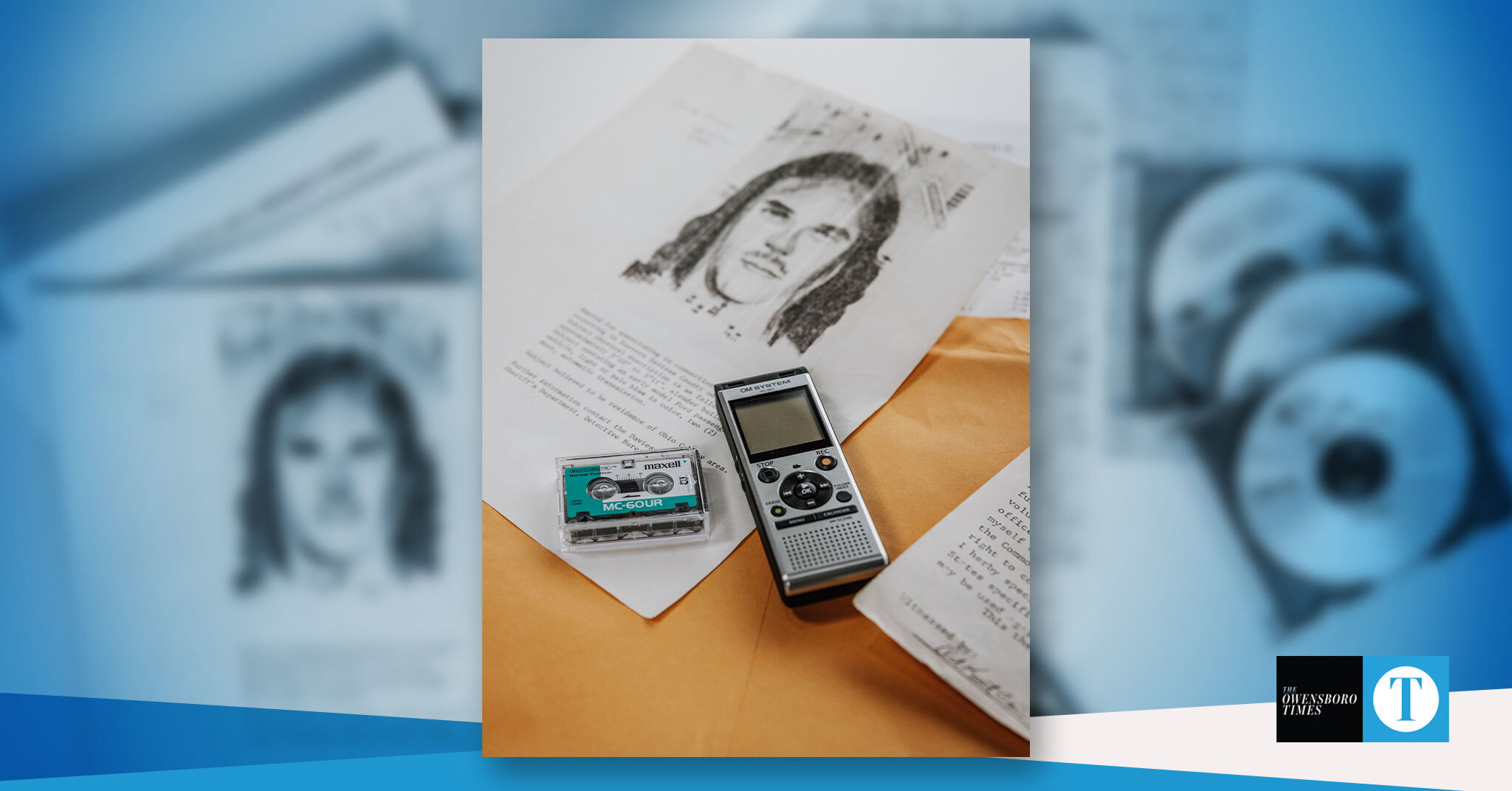
But the confession was never formally documented, recorded, or preserved in the case file.
“We don’t have the actual confession,” said DCSO Cold Case Detective Mike O’Herron, who joined the staff in late 2025. “We don’t have a name. We don’t know who the patient was. We don’t know which nurse or healthcare worker heard it.”
As a result, O’Herron said, the investigation has to move backward, starting not with a suspect, but with the person who heard the confession.
“My next step is trying to determine what hospice nurses or healthcare workers had contact with a patient who passed away in 2021 and may have made some sort of confession,” he said. “Then you work your way down the list and ask, ‘Does this ring a bell?’”
He acknowledged the task is daunting, but said a confession like that would be hard to forget.
“If somebody told you something like this, it’s not something you hear every day,” O’Herron said. “I’m hoping it makes a light bulb go off.”
Confession 2: Did a man really murder and bury his wife?
The second deathbed confession the Sheriff’s Office is investigating may involve a homicide that was never officially identified as one.
According to Youngman, authorities in another state notified Daviess County investigators of a deathbed confession in which a man claimed he murdered his wife decades ago, killing her in Florida and later transporting her to Daviess County for burial. Investigators believe the alleged homicide may have occurred in the late 1980s or early 1990s.
But nearly everything else is missing.
“We don’t have the body. We don’t have the person who gave the confession,” Youngman said. “And it did not match any open cases that anybody here was aware of.”
Payne said the allegation has circulated informally for years, but investigators are still trying to determine whether there is any hard documentation to support it.
“We’re still trying to confirm there was actually a homicide,” Payne said. “Is there any hard fact? Any documentation? As of yet, no — but it’s still actively being worked.”
O’Herron said when he first became involved, the information amounted to little more than a single sentence.
Now, investigators are digging through archival records, obituaries, and historical addresses tied to the alleged suspect, trying to reconstruct who the victim may have been and whether she was ever reported missing.
“We’ll start with what we know about him through archives,” Youngman said. “Then we look at obituaries, previous spouses, anything that might give us a name to work with.”
Despite the gaps, Youngman said there are elements of the confession that suggest it may be credible.
“There are some supporting details that make us believe this very well may have happened,” he said. “If we locate a body, this is one that could move pretty quickly from there.”
For now, investigators are holding back specific names and locations as the case remains active.
A call to the public
Investigators are now asking anyone who may have heard one of these confessions, even years ago, to come forward.
“If somebody told you this, you wouldn’t forget it,” O’Herron said.
Youngman emphasized that while justice is always the goal, closure matters deeply to families who have waited decades for answers.
“If we can tell survivors what happened, even if the suspect is dead, I still think there’s a high degree of success there,” he said.
Anyone with information related to either confession is encouraged to contact the Daviess County Sheriff’s Office at 270-685-8444.
“Sometimes,” Youngman said, “the truth doesn’t come out until the very end. And when it does, we want to make sure we don’t let it disappear again.”