This story is sponsored by Daviess County Farm Bureau.
For more than 70 years, the Fischer family has tended to their land in Daviess County — a farm that has evolved from tobacco fields to a thriving hub of innovation featuring shrimp, tilapia, and microgreens.
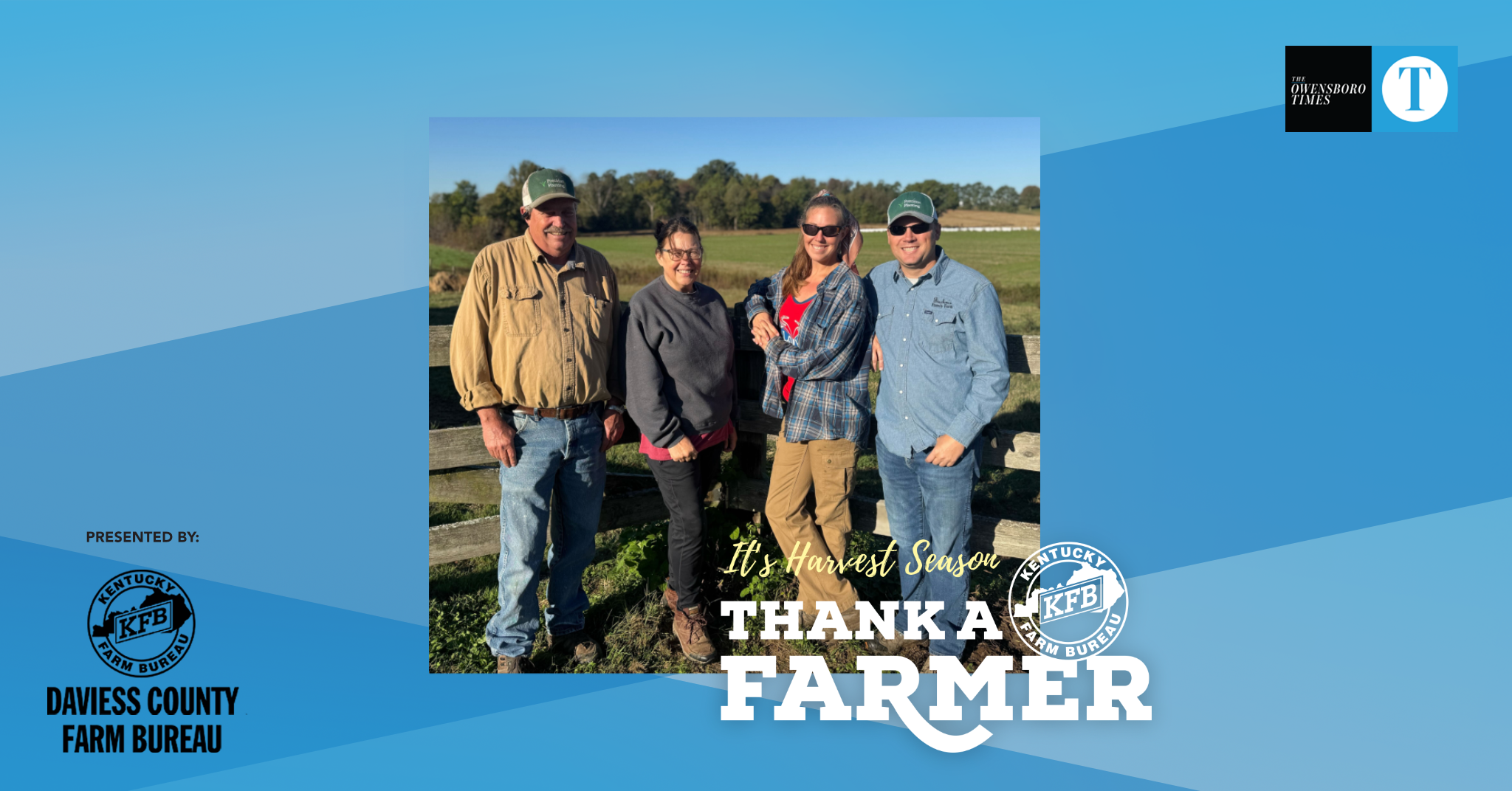
Kenny and Becky Fischer, along with their daughter Laura Dalton and son-in-law Quincy Dalton, now operate Fischer Family Farm, which spans roughly 1,000 acres of corn, soybeans, canola, hay, and cattle. But it’s their unique foray into aquaculture and greenhouse production that has set them apart from most family farms in the region.
“My dad started this place back in ’54,” Kenny said. “We bought in around 1989 and took it over in the early 2000s. Back then, it was tobacco, cattle, and row crops. When tobacco started playing out, we got into greenhouses and shrimp — just trying to find things to diversify.”
The Fischers’ shrimp operation began as an experiment but quickly grew into a local success story, supported by guidance from Kentucky State University. The family once raised tilapia as well, but sourcing baby shrimp, known as post-larvae or PLs, has recently become a challenge.
“We’ve never had trouble selling shrimp — it’s getting the little ones that’s hard,” Kenny said. “The guy we usually buy from just isn’t supplying them anymore.”
Laura said shrimp farming has been a steep learning curve, describing the creatures as “very sensitive to change.” Kentucky State University researchers have assisted the family in refining their process and collecting water data for a research collaboration.
“They’ve told us we’re not raising shrimp, we’re farming water — the shrimp are the byproduct,” Laura said with a laugh. “We test water and weigh the shrimp weekly, sharing all that data with the university.”
Their Pacific white shrimp live in heated pools in a converted barn, surrounded by aerators, pumps, and filtration systems. The family also manages a greenhouse where they grow lettuce and microgreens to sell at the Owensboro Regional Farmers’ Market.
“Plants and fish require very different environments,” Laura said. “We tried combining them under aquaponics but found we got better quality produce and better quality shrimp when we kept them separate.”
Quincy added that locally sourced seafood may cost more but offers a safer, cleaner, and fresher product.
“Once you see where some imported shrimp are raised, you’d never touch them again,” he said.
For the Fischers, farming remains a way of life that binds their family together across generations. Laura, who left home for several years before returning in 2013, said the land and the lifestyle always drew her back.
“This is home,” she said. “When you’re born into it, it’s not just a job — it’s who you are. I can’t sit still in the winter. It’s just part of life.”
Though the family no longer raises tobacco, their efforts to diversify — and to share their story online — have helped them stay connected to both tradition and innovation. Through social media, they’ve found new audiences who are curious about sustainable, locally grown food.
“Social media is a free marketing tool,” Laura said. “It’s helped people see that harvest season isn’t just row crops anymore.”