Farmers across western Kentucky are facing mounting financial pressure this growing season as fertilizer, fuel, and other input costs continue to rise while commodity prices remain relatively low, according to agricultural leaders and local producers.
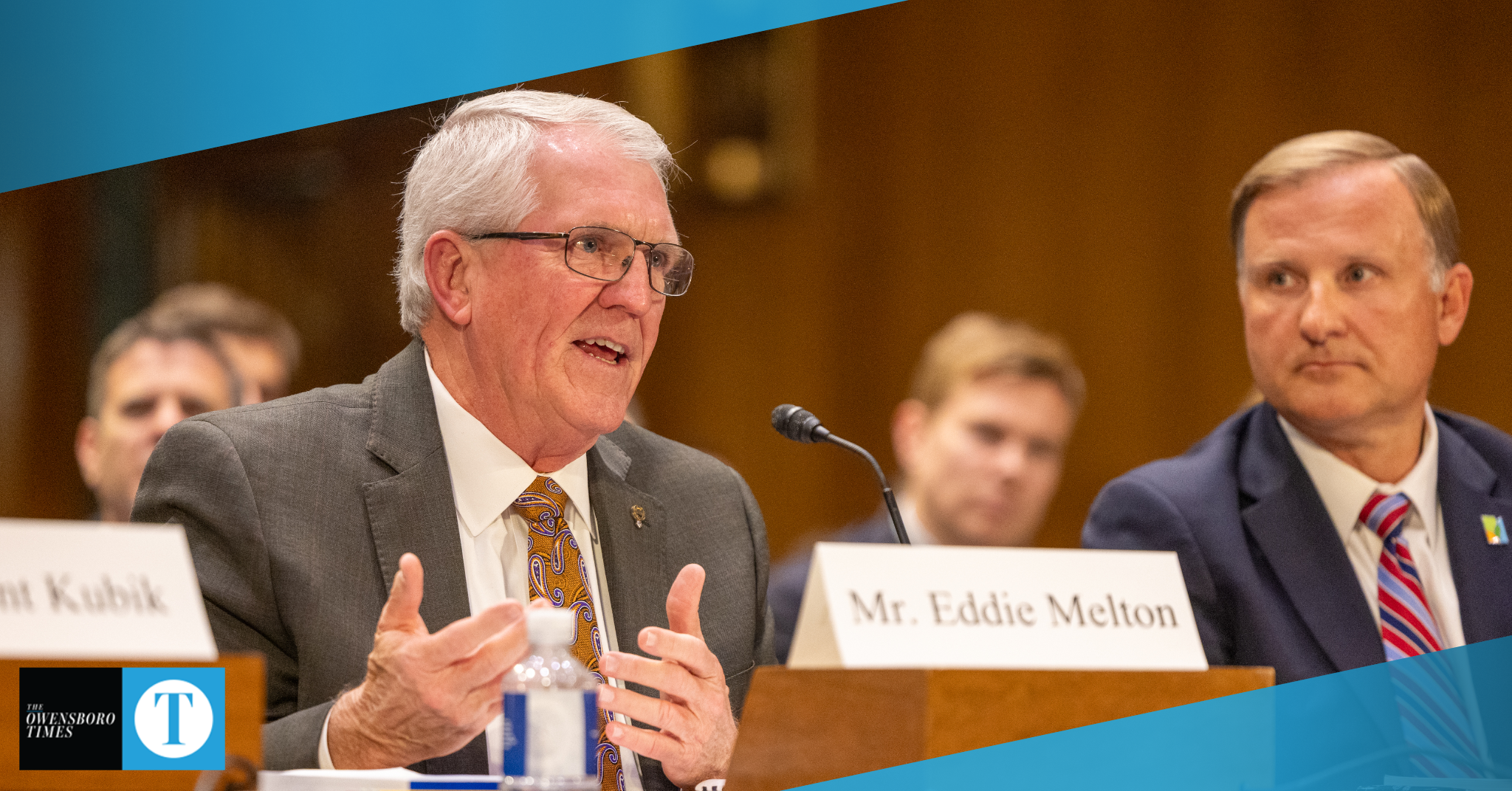
The concerns were highlighted this week during testimony before the U.S. Senate Committee on Agriculture, Nutrition, and Forestry by Eddie Melton, president of Kentucky Farm Bureau and a fifth-generation farmer from Webster County.
Melton told lawmakers the agriculture industry is facing “sustained economic pressure” driven by rising fertilizer prices, elevated fuel costs, and declining crop prices.
“This year marks the fourth consecutive year of decline,” Melton said in his testimony. “Unlike previous cycles, producers are not benefiting from strong crop prices to offset higher expenses. Instead, they are being squeezed from both sides.”
Melton said production expenses nationwide are projected to reach a record $478 billion in 2026, according to the USDA. He also noted fertilizer affordability has worsened as corn prices have fallen from roughly $6.50-$7 per bushel in 2022 to around $4.15 today.
Locally, farmers said those economic realities are already being felt throughout Daviess County and western Kentucky.
Brandon Gilles, president of the Daviess County Farm Bureau, said the county’s strong agricultural presence makes the issue especially significant locally.
“Daviess County, being a regional agricultural hub and a top corn and soybean producer, is heavily impacted,” Gilles said. “Fertilizer that is detrimental to production has continued to challenge Kentucky farmers’ affordability.”
Gilles said many producers are dealing with shrinking margins as input prices rise and crop markets remain soft.
“This is the fourth year in a row of declining farm income in Kentucky,” Gilles said. “This has continued to provide some working capital challenges for us producers.”
While dry weather helped many western Kentucky farmers get crops planted earlier than usual, Gilles said drought conditions are beginning to emerge in parts of the region.
“We’re probably further ahead than we typically are this time of year,” Gilles said. “Which isn’t a bad place to be at.”
Still, he said, many producers remain concerned about the broader economic picture facing agriculture.
“Rising input costs and low commodity prices threaten family farms, local jobs, and Daviess County’s rural economy,” Gilles said. “Global markets impacted by conflict in the Middle East have contributed to higher costs recently. We have felt the pressures of higher input prices for years.”
Melton echoed that concern in his testimony, telling senators that fertilizer price increases have been worsened by international conflicts and shipping disruptions near the Strait of Hormuz, a critical global trade route for oil and fertilizer products.
According to Melton, fertilizer prices have climbed sharply since February, including a 55% increase in urea prices and a 33% rise in anhydrous ammonia prices. Farm diesel prices, he said, have increased 72% during that same timeframe.
Melton also cited a recent American Farm Bureau Federation survey showing nearly 72% of Kentucky farmers said they could not afford all the fertilizer they needed this growing season. About 90% reported being in the same or worse financial position compared to last year.
Clint Hardy said many western Kentucky farmers entered 2026 already financially strained following a difficult 2025 crop season.
“We’re surviving off much reduced gross income from 2025,” Hardy said. “These increasing costs are really, really hurting.”
Hardy said many local producers were unable to lock in fertilizer prices before major increases hit earlier this spring.
“Locally, that’s less than half — maybe only 30 to 40% — that was prepaid and priced,” Hardy said. “So, 60-70% of the people were paying this much elevated market price for fertilizer.”
He said many farmers are now trying to reduce costs wherever possible, including cutting back on tillage, using less fuel, and reevaluating fertilizer efficiency.
“This year, because we were dry, farmers used far less tillage than they typically do,” Hardy said. “That saved a tremendous amount of labor and a tremendous amount of fuel.”
Despite the financial pressures, Hardy said western Kentucky crops currently appear strong due to favorable spring planting conditions.
“We have got an outstanding crop growing across the county,” Hardy said. “We’re a little drier than we typically are this year, but it’s been a blessing from getting a crop off to a great start.”
At the same time, Hardy noted that strong cattle and protein markets have helped offset some of the struggles affecting grain farmers.
“The demand for protein meat — whether it’s beef, pork, or poultry — is strong right now,” Hardy said. “These individuals who are in those agriculture sectors are being rewarded right now.”
Melton warned lawmakers that continued financial strain could reshape the future of American agriculture if action is not taken.
According to USDA data cited in his testimony, the United States lost more than 199,000 farms and more than 20 million acres of farmland between 2017 and 2022.
“If farm closures, farmland loss, and consolidation continue, the long-term structure of American agriculture will begin to change,” Melton said. “That change poses a risk to our national security by weakening domestic food production capacity and increasing reliance on foreign, less resilient supply chains.”
Melton called on Congress and the Trump administration to provide additional short-term economic assistance while also expanding domestic fertilizer production and improving transparency in fertilizer markets.
Gilles said local Farm Bureau leaders will continue advocating for policies that support Kentucky farmers.
“Kentucky Farm Bureau and Daviess County Farm Bureau will continue to advocate for Kentucky’s farm families and rural communities,” Gilles said. “Policy that promotes input affordability and expanding market demand stays at the top of our priority list.”