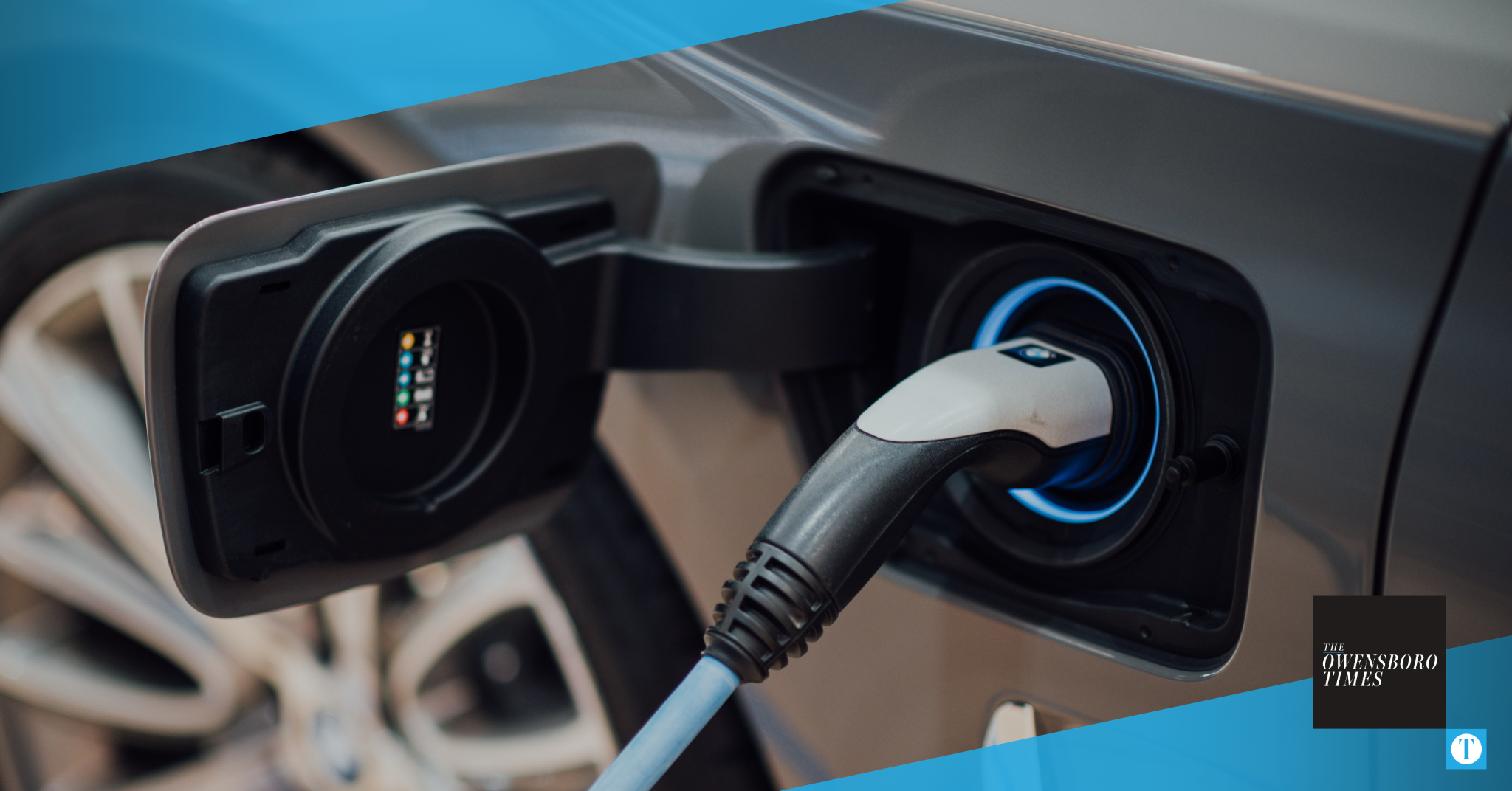
Six high-speed electric vehicle (EV) charging stations are coming to the Greenfield Inn and Suites on the west side of Owensboro as part of the federally backed National Electric Vehicle Infrastructure (NEVI) program, marking the city’s first project under the initiative.
Tom Lovett, director of the Owensboro-Daviess County Metropolitan Planning Organization, said the site was selected by the Kentucky Transportation Cabinet (KYTC) based on criteria developed to support a nationwide network of EV chargers, with the goal of placing a fast charger every 50 miles and within one mile of an interstate or highway corridor.
In this case, the Greenfield Inn sits just off the Audubon Parkway at (3220 West Parrish Avenue) and also serves traffic on the U.S. 60 bypass and nearby I-165.
Drew Mistry, property manager for the Greenfield Inn (3220 West Parrish Avenue), said the hotel pursued the project about a year ago after noticing an increase in electric vehicles in the area and a lack of nearby public charging options.
“We see a lot of electric vehicles, and there’s just not many ports around here that people can use,” Mistry said. “If people want to spend the night and charge, this gives them a reason to stop in Owensboro.”
The three new chargers coming to the Greenfield Inn will be Level 3, the highest option for EV charging stations:
- Level 1: Standard outlet, adds 3-5 miles per hour — very slow.
- Level 2: 240-volt outlet, similar to a clothes dryer — common at homes and businesses.
- Level 3 (DC Fast Charging): High-speed charging that adds 60-100+ miles in about 20 minutes, depending on vehicle and equipment.
EV infrastructure in Owensboro is relatively sparse. Currently, the city has a few Level 2 charging stations (comparable to a dryer outlet and typically requiring several hours for a full charge) at places like Don Moore Honda, Champion Ford Lincoln, and the Hampton Inn downtown. Don Moore Hyundai is the only site with Level 3 chargers that remain publicly accessible.
Nearby fast charging options include Meijer in Evansville and the rest stop in Beaver Dam on the Western Kentucky Parkway.
During a recent MPO meeting, Director Tom Lovett explained that multiple factors go into NEVI site selection, including proximity to federal corridors, the one-mile distance requirement, and local willingness to apply and match funds.
“We don’t know who all applied or didn’t apply,” Lovett said. “But the state determined that the Greenfield site was the best location to serve the Audubon Parkway. Once the initial corridor buildout is complete, there will be another wave of funding for more competitive installations — that’s when we may see places like Walmart, Kroger, or other major retailers jump in.”
The MPO conducted a public comment period in June about the plan to add EV charging stations at the hotel, receiving a wide range of responses. Some expressed strong support for EV infrastructure, citing personal experiences with the lack of charging options in Owensboro.
“As a new Tesla owner, I recently had to drive to Beaver Dam and Evansville just to access a Supercharger,” wrote local resident Christopher Watkins. “Installing one in Owensboro would not only serve locals but also attract travelers and boost local business.”
Others questioned the location.
“I support public chargers, but I’ve had negative experiences with hotels denying restroom access to non-guests,” wrote EV owner Jody Shelton. “Other spots like Five Star or Kroger would offer better public amenities.”
Another commenter, Lindsey Hallden, urged caution, citing the high upfront costs and lack of immediate demand.
“Most EV usage here is residential,” Hallden said. “Shouldn’t we incentivize private businesses instead of building publicly subsidized stations in questionable locations?”
Still, many agreed that the project marks a long-overdue investment in Owensboro’s future.
“When I look at the map of charging stations in Kentucky, I wonder what happened,” wrote Donna Phillips. “How did Kentucky’s fourth-largest city fall so far behind?”
The Greenfield project received approval through an amendment to the MPO’s Transportation Improvement Program (TIP). According to MPO documents, the design phase is slated for 2025 with construction scheduled for 2026. The total project cost is $716,486, with $573,189 in federal NEVI funds covering 80% of the cost and the remaining $143,297 to be provided by the developer.
The NEVI program was created through the Bipartisan Infrastructure Law signed by President Joe Biden in 2021, allocating $5 billion to help states build out a national EV charging network. However, the Trump administration has since proposed cuts to the program, citing concerns about the effectiveness and demand for EV infrastructure, according to reporting by the Associated Press.
Owensboro’s project was approved before those cuts were announced and at this time is expected to remain fully funded under its existing agreement with KYTC.
Visit Owensboro President and CEO Mark Calitri called the project a “smart first step” in modernizing local infrastructure.
“We’re always looking for ways to add amenities and stay ahead of the curve,” Calitri said. “That said, until battery technology improves and more travelers are routinely driving longer distances in electric vehicles, we’re still figuring out what the broader vision looks like. For now, we’ll keep a close eye on usage and let the data help guide what comes next.”
Construction has not yet begun on the site, and Mistry said a timeline has not been finalized. He said the chargers will likely be installed in the front-facing lot near the property’s signage.
As EV adoption grows, local officials say this marks just the beginning.
“It’s past time that we do this,” Lovett said. “And the public seems ready.”