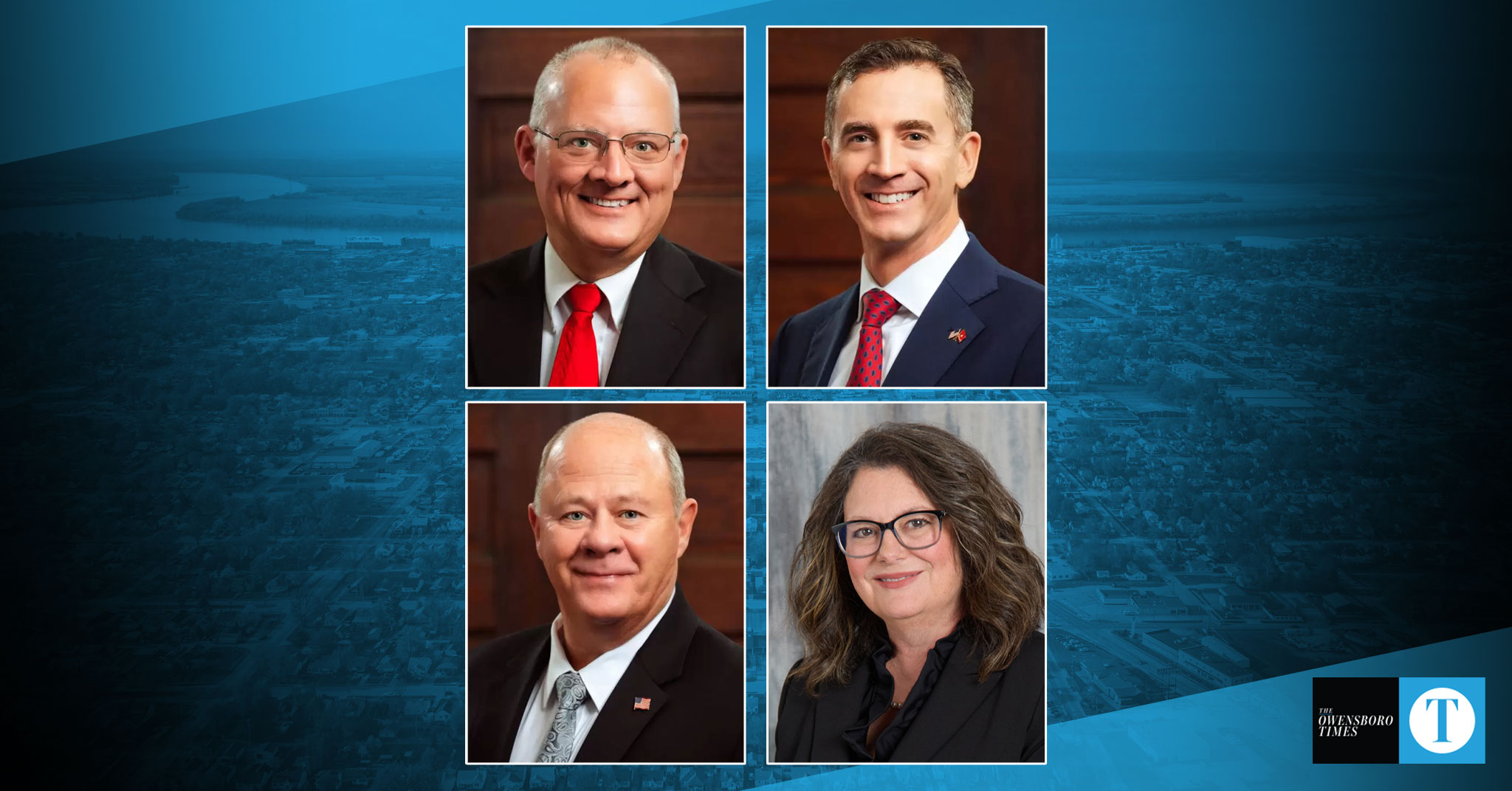
Daviess County Fiscal Court on Thursday will consider the first reading of an ordinance that would impose a one-year moratorium on accepting or processing applications related to large-scale data centers and other I.T. infrastructure facilities in Daviess County.
Because the proposal is an ordinance, no vote will take place at Thursday’s meeting. A second reading and vote would be required at a later meeting before the moratorium could take effect.
According to the proposed ordinance, the temporary moratorium would halt the acceptance, review, processing, or approval of applications tied to the “establishment, expansion, or construction” of data centers in Daviess County for 12 months.
The ordinance states that the current Owensboro Metropolitan Zoning Ordinance and Comprehensive Plan do not specifically address data center development and says additional study and potential zoning amendments are needed before such facilities are considered.
If approved, the ordinance would direct the Owensboro Metropolitan Planning Commission to study the impacts of data centers on local infrastructure, environmental concerns, and land-use compatibility, while also evaluating appropriate zoning districts and possible regulations.
Judge-Executive Charlie Castlen said the idea for the moratorium originated after he and County Commissioner Chris Castlen attended a Kentucky County Judge/Executive Association conference earlier this year, where data centers were discussed by officials from other communities.
“They covered data centers and what we can do to address people’s concerns about them,” Charlie Castlen said.
He said officials at the conference discussed concerns surrounding water usage, noise levels, and electricity demand associated with data centers, as well as potential ways communities have attempted to address those issues through local regulations.
“One was water usage, and they said they can get around that with what they call a loop system,” he said. “… Then the other thing is, they mentioned noise, and they said a lot of places will put a requirement like 100 yards from the edge of the property, the noise cannot be more than X number of decibels.”
Castlen also said power consumption was a major topic.
“Some people are concerned that it drives up your electric rates, and one of the things you can do is require them to have their own power system,” he said.
He said he began considering a possible moratorium shortly after returning from the conference, particularly as general data center discussions — not necessarily specific projects — began surfacing in western Kentucky communities.
Chris Castlen said he felt it was important for local officials to better understand the potential impacts before considering any future proposals.
“After that conference was over, I told the judge, ‘This could be the next thing that comes to Daviess County that could create a lot of issues and concerns. Before it happens, I would like for us to be able to do a moratorium or study more about it and know more about what we’re getting into before we say yes or no to something,’” Chris Castlen said.
He said electricity demand is one of his biggest concerns.
“The electricity they use is a huge concern for any community,” he said. “They don’t even have to be in your community, but if they’re close to a community that uses energy from the same source, then it can be a concern.”
Chris Castlen also said county leaders need more time to fully evaluate how water access and other infrastructure demands could affect residents.
“Without having a history with them or knowing much more about them, we absolutely need to have people who know more about them do the research for us and find out what’s best for our community,” he said.
He also urged residents not to rush to conclusions based on rumors or speculation.
“I would ask that the public allow us time to review this without making automatic assumptions about what we’re going to do and why,” he said. “People get hold of rumors and think something else is going on when it’s not.”
County Commissioner Larry Conder said he understands the reasoning behind the moratorium proposal but worries about the broader message it could send to businesses considering locating in Daviess County.
“When you add all that up and start looking at it in combination, what I fear is a stronger message is being sent out: you might want to check before you come to Daviess County about doing much of anything because they’ve put moratoriums on different types of things in their community,” Conder said.
He pointed to existing or previously discussed moratoriums involving solar farms, rehabilitation centers, wind farms, and battery storage facilities.
“My hope is that’s not what happens, but I fear it is happening,” Conder said.
Conder also noted that incorporated cities would still have the authority to remove or modify the moratorium within their own jurisdictions if they chose to do so.
County Commissioner Janie Marksberry said she encouraged Charlie Castlen in recent weeks to pursue a moratorium because of growing public concern and rumors surrounding possible future data center development.
Marksberry said she believes residents are concerned about potential impacts on neighborhoods and utility costs.
“It’s a big deal, and it could be put in a spot where it would really affect a lot of residential homes,” she said.
She also raised concerns about noise and electricity demand associated with some facilities.
“There’s terrible drone noise that comes from these centers, and it can be heard for over a mile away,” Marksberry said. “To me, that’s one of the biggest problems, as well as it’s going to drive up utility rates. The people who are for it are going to try to make you think it won’t, but everything that I have read and studied says the opposite — that it will make utility rates go up. People are barely able to pay their electric bills now. I don’t know how a lot of residents will be able to handle that.”
Marksberry also said she believes government officials should be transparent with residents as discussions continue.
“I think transparency in government is so important,” Marksberry said. “I think that’s what we owe our citizens.”