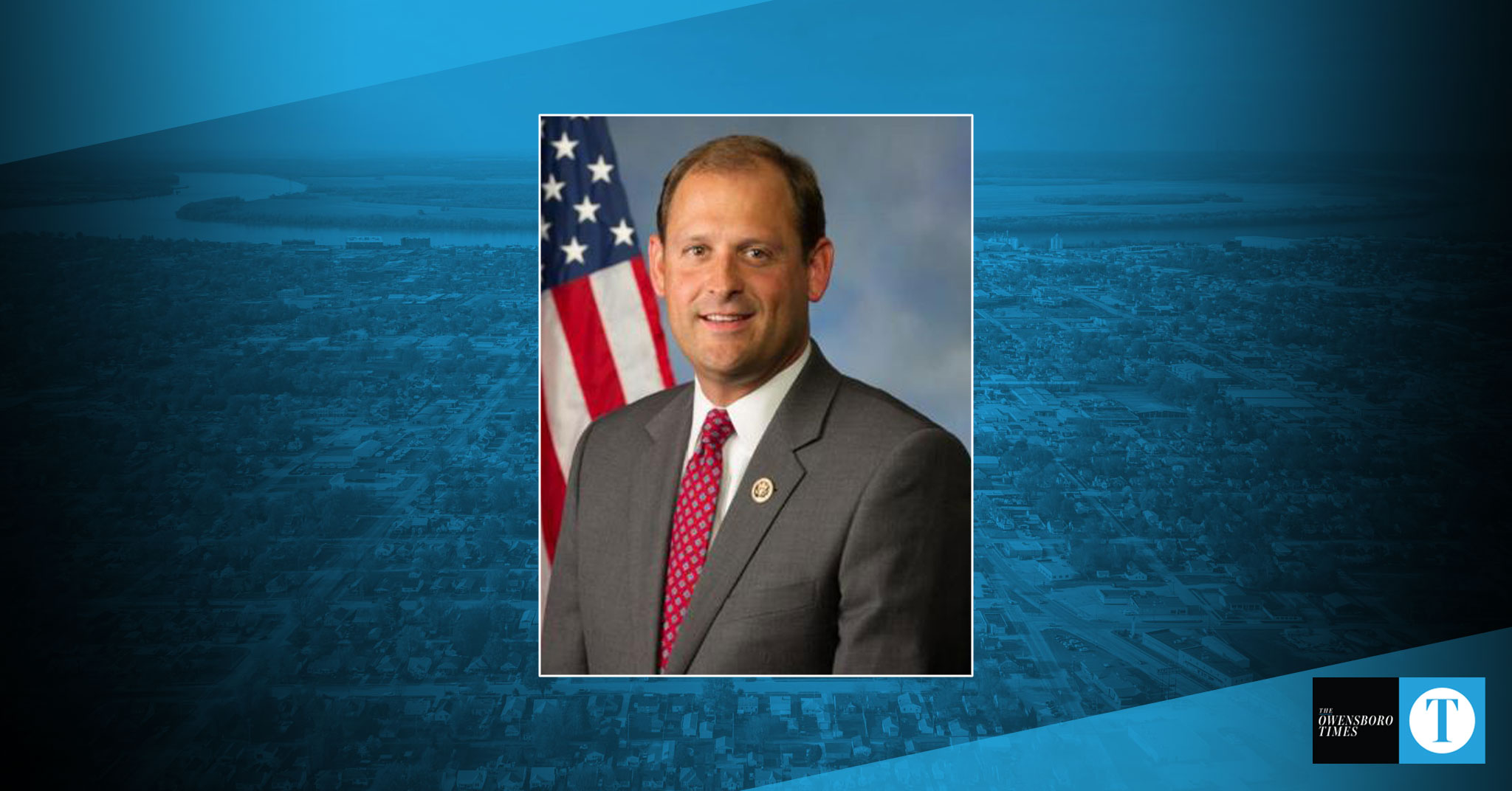
Republican U.S. Rep. Andy Barr said Tuesday that housing affordability, artificial intelligence infrastructure, and the long-term future of Social Security are among the issues Congress is addressing that could have significant impacts on western Kentucky.
Barr spoke with reporters on a handful of issues during a stop in Owensboro. Asked about inflation and the everyday cost of living, Barr said Congress is pursuing policies aimed at increasing housing supply and expanding competition among mortgage lenders.
“We are poised to pass a housing bill that will provide more supply of housing,” Barr said. “That’s the way to get prices down, is more supply of housing.”
He also said reducing regulations on community banks and mortgage lenders could help lower housing costs.
“More competition and choice in mortgage lending will lower the cost of housing,” Barr said.
He added that he expects gas prices to come down with the recent peace deal with Iran that helped reopen the Strait of Hormuz.
Barr spent considerable time discussing artificial intelligence and the infrastructure needed to support it, including data centers and power generation.
“It should be the policy of the United States of America to win the race for artificial intelligence dominance,” he said.
Barr said AI has the potential to improve productivity in manufacturing, medicine, pharmaceutical development and education, but doing so will require investments in data centers, semiconductor production, and electric generation capacity.
While supporting AI infrastructure development nationally, Barr said decisions about locating data centers should remain with local communities.
“If Daviess County doesn’t want it, if Hancock County doesn’t want it, if Ohio County doesn’t want it, that’s their decision,” Barr said. “Localities will have the decision whether they want that tax base or they don’t want that tax base.”
Barr said communities should evaluate projects individually based on factors such as utility impacts, tax revenue, and infrastructure investments.
“Some communities are going to want those projects, some communities are not,” he said. “The people should be in charge of those decisions.”
Asked about healthcare spending and Medicaid, Barr said he supports what he described as “patient-centered health care reform” focused on increasing competition and choice while lowering costs.
He said reforms should focus on expanding options for patients and employers rather than moving toward government-run healthcare systems.
On Social Security, Barr said he does not support changes affecting current retirees but believes reforms will eventually be necessary to ensure the program remains available for younger Americans.
“Social Security is a promise,” Barr said. “Social Security does need reform for future generations, but I think it’s unfair to make changes to Social Security for people who are seniors, who are current retirees. But certainly for young people, if the system is not changed, Social Security won’t be there for them. Our job in Congress is to work in a bipartisan way to make reforms for future generations of retirees to make sure that when they retire, the government will keep its promises.”
He said future reforms should focus on maintaining the program’s long-term stability while encouraging additional retirement savings through private investment and employer-sponsored plans.