A newly formed Daviess County drainage advisory board held its first meeting on Friday, beginning what officials described as a long-term effort to address flooding, drainage maintenance, and stormwater management issues across the county.
The board, chaired by Daviess County Commissioner Chris Castlen, was created to help identify drainage concerns, gather public input, review existing policies, and recommend solutions aimed at reducing flooding impacts on roads, farms, businesses, and neighborhoods.
Castlen said the group’s overarching goal is to build consensus around practical ways to improve drainage infrastructure while protecting public safety and property.
“We want to find a way to help with flooding,” Castlen said. “This is going to be an ongoing thing that’s continual — addressing concerns, looking into things, and trying to figure out how to get to the next level of what we want to achieve.”
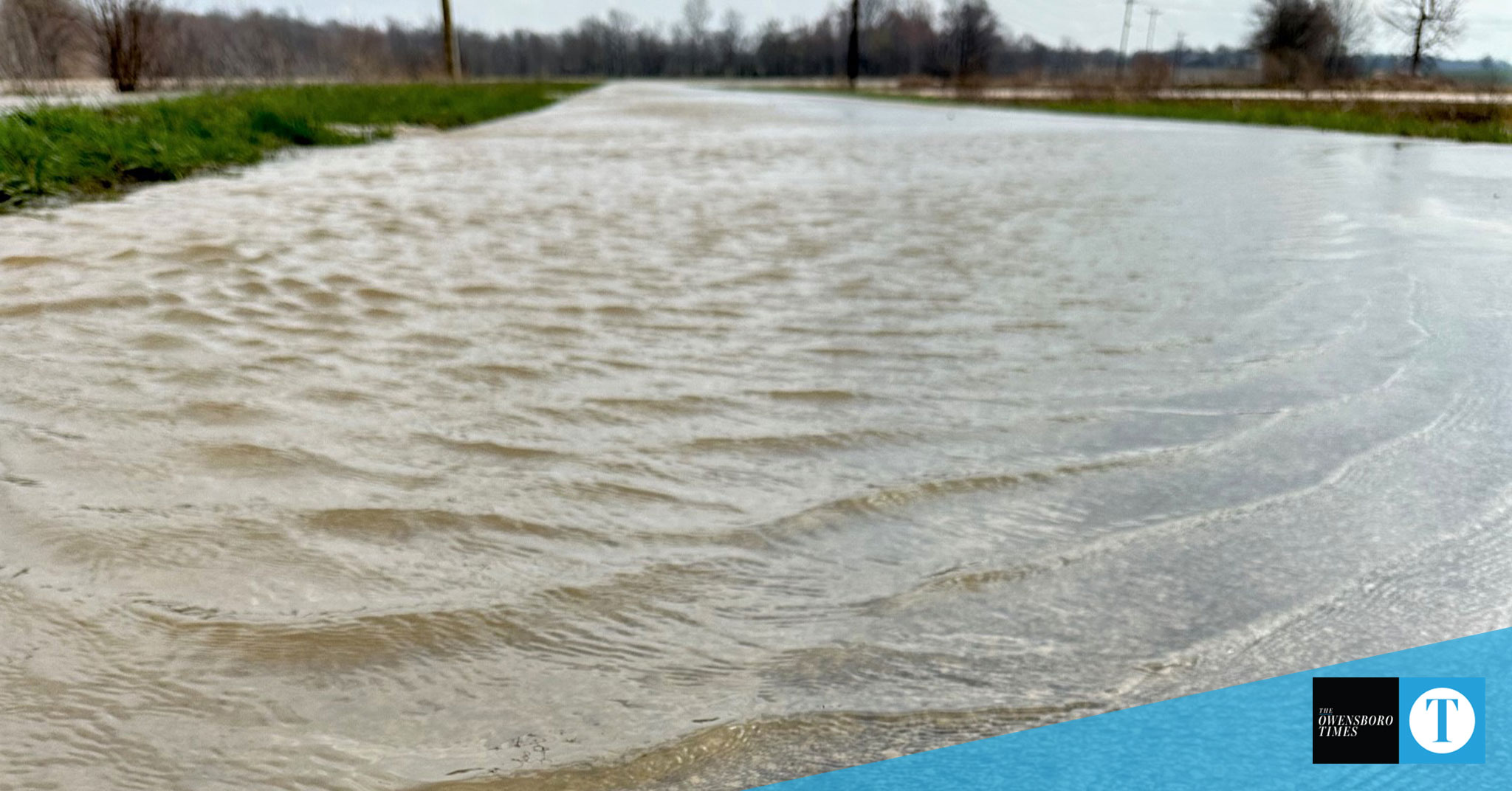
Throughout the meeting, members described a range of drainage concerns affecting different parts of the county. Multiple farmers said they have seen roads close more frequently after relatively modest rain events and argued that drainage channels throughout the watershed are not functioning as effectively as they once did. Others pointed to a lack of maintenance on secondary ditches and drainage routes that feed into larger waterways, saying problems in one location can create impacts throughout an entire system.
Members also discussed challenges involving private property, questioning what authority exists for the county to perform drainage work and how responsibility is assigned when water flows across multiple properties. Castlen said part of the board’s work will involve reviewing the county’s stormwater maintenance policy and exploring whether updates could provide additional flexibility while remaining legally defensible.
The group also raised concerns about continued residential, commercial, and industrial development and how additional runoff may affect existing drainage systems. Members discussed whether current stormwater regulations adequately account for long-term impacts and suggested that development standards could be among the topics examined as the board moves forward.
Another recurring theme was public safety. Board members noted that flooded roadways can affect school bus routes, emergency response times, and access for residents, arguing that drainage issues should be viewed as an infrastructure and safety concern in addition to an agricultural one.
Castlen said one of the board’s first priorities will be reviewing recommendations from previous studies conducted by agencies, including the U.S. Army Corps of Engineers and the Kentucky Division of Water. The board also discussed the possibility of hiring a hydrology engineer or similar consultant to help evaluate existing data and identify projects that could provide the greatest benefit.
The advisory board also plans to explore a public reporting system that would allow residents to submit drainage concerns online, helping county officials identify recurring problem areas and prioritize future work.
Castlen emphasized that the board’s work will be a long-term process and said members will focus on gathering information, evaluating options, and developing recommendations that can guide future county action.
The advisory board plans to meet monthly as it continues evaluating drainage concerns and potential solutions.