This is a paid story.
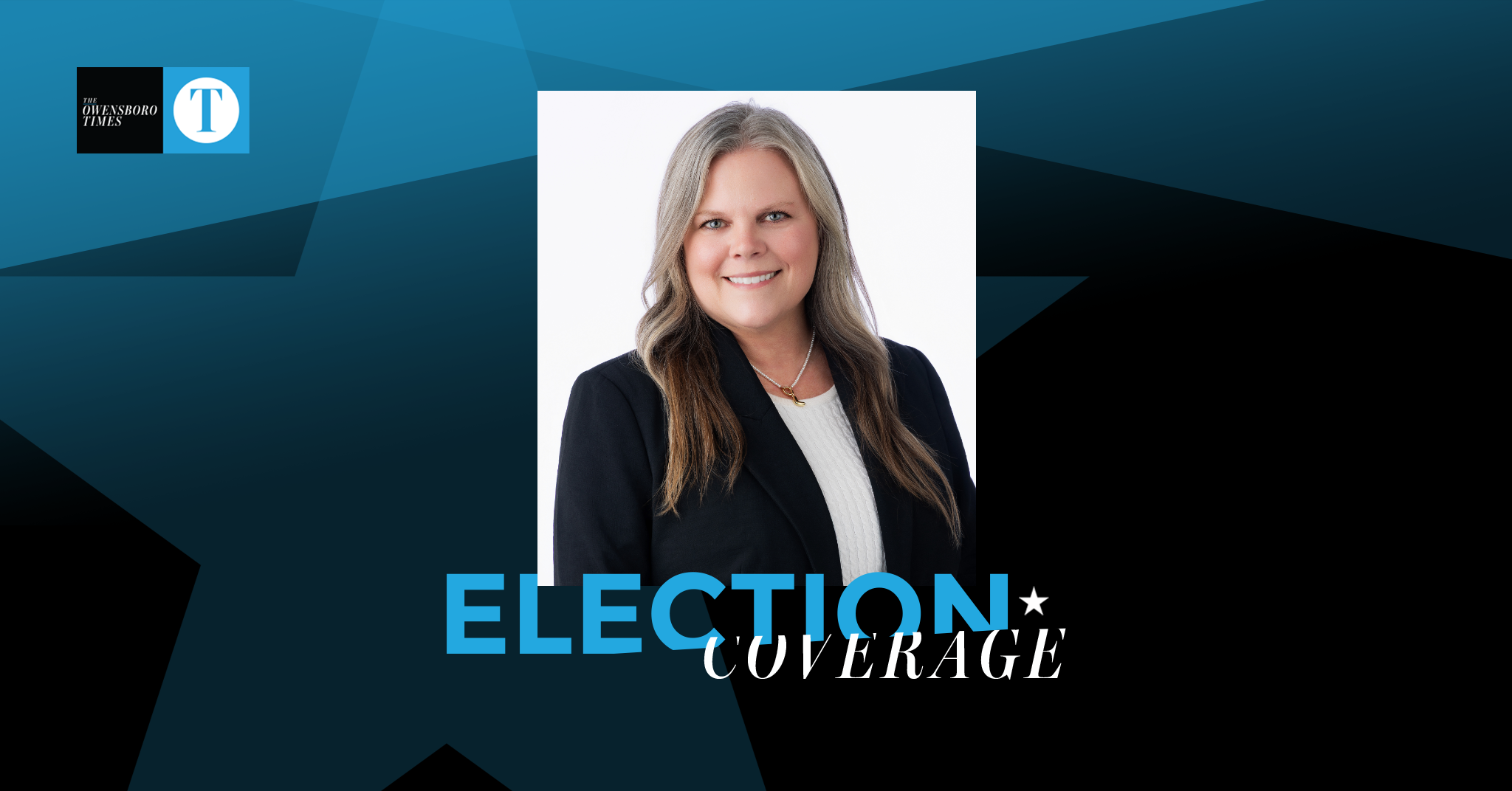
Lelah Rogers is seeking election as Daviess County District Court Judge, Division 1. After more than two decades representing clients across Daviess and Ohio counties, she said her experience on the front lines of the justice system has shaped a practical, people-centered approach she would bring to the bench.
Rogers lives in Owensboro with her husband, Jason Reeves, and their five children: Ava (21), a teacher at Owensboro High School; William (18), a Western Kentucky University student studying civil engineering; Logan (17), a senior at OHS; Charlie (15), a freshman at OHS; and Max (10), a 4th-grader at Tamarack Elementary.
“Raising five children while balancing the heavy caseload of a public defender has been difficult,” Rogers said. “It takes a lot of effort and sacrifice to manage 200 clients at any given time with such a busy household. I think as my children have gotten older, they understand why I wasn’t also home for dinner or had to spend weekends working.”
Rogers is also active in the community. She is a long-time member of the Junior League of Owensboro, a member of Impact 100, a Kentucky Colonel, and a board member of Girls Inc.
“When Ava was young, I would take her to every Junior League meeting and event,” Rogers said. “All my children have grown involved in the community because I was, and I wanted to share that experience with them.”
Rogers earned her undergraduate degree in English from UCLA before obtaining her law degree from the University of Kentucky College of Law.
Since graduating from law school in 2005, Rogers has been working for more than 20 years with the Department of Public Advocacy, saying she has stood beside people at some of the lowest points of their lives.
Averaging several hundred clients per year, Rogers said she has represented thousands of clients in Juvenile, District, and Circuit courts in Daviess, Ohio, and several other counties. As part of her practice, she has also had to travel across the state to various juvenile detention centers, local jails, and state prisons to meet with her clients.
Rogers said she has represented individuals on simple cases, such as thefts and DUIs, to the most serious cases, including death penalty work. Rogers has also mediated and tried many cases over the years.
“I know how District Court works,” she said. “It is one of my specialties. I know my clients and the struggles they face daily. I work with law enforcement, rehabilitation centers, specialty courts, victims, and advocates. I take cases of trial and mediate them. There isn’t much I haven’t seen at this point in my career.”
Rogers said her experience has given her a deep understanding of how cases move through the justice system and how early decisions and actions can benefit everyone involved. She said many of the cases she has handled involve people dealing with addiction, mental health challenges, homelessness, unstable family environments, lack of support, and poor education.
“District Court is often the first point where these issues appear within the legal system, and we have the chance to positively influence the lives of these folks and their families so that we can lower recidivism and give people a better chance at being productive and living stable lives,” she said.
Rogers believes judges must balance accountability with compassion while applying the law fairly. She said it is important for individuals, both juveniles and adults, to take responsibility for their actions, adding that if they don’t do that, they cannot work on changing that behavior.
“I strongly believe that for people to make progress, they need to take responsibility for their actions,” she said. “Taking responsibility for something gives you the power to change it.”
Rogers said that sometimes, though, people need help knowing how to change and what programs have to offer for support.
“So many of my clients are just surviving,” she said. “It is hard to overcome obstacles when dealing with food insecurity and homelessness. These issues are not only present with my clients, but also with victims. Truthfully, many of the people who appear in court have also been victims, and victims have been defendants. It is a systemic problem.”
Rogers believes listening carefully to individuals who appear in court is an important part of ensuring the process is fair and that people understand the decisions being made.
“I have seen the difference it makes to my clients when a judge takes an interest in them by listening and maybe even asking a simple question,” she said. “This is particularly true in juvenile court when so many of the kids that come through the court lack support at home. They want and need someone to see value in them. It sounds like such a simple thing, but it makes all the difference in the world.”
Rogers said that the most pressing issue facing children in juvenile court today is gun violence.
“While our children are struggling with housing and food insecurity, the most urgent issue we are seeing right now is gun violence,” she said. “Ten to 20 years ago, you would see kids fighting and getting assault charges with minimal injury. Now, some juveniles are carrying guns because it seems to be the cool thing to do. A situation or argument that previously may have ended in a black eye now ends with a gun fight.”
She added that it seems that some kids are getting guns from their own homes when guns are not kept under lock and key, while others may be stealing firearms from vehicles.
“In some cases, juveniles are simply walking around checking for unlocked cars and stealing guns they find,” she said. “A gun owner may not even know their gun has been stolen until it has already been sold or used.”
Rogers said she has remained with the public defenders for all these years because she felt a need to help people.
“I had my daughter in law school. My husband and I were not married yet, and firms did not want to hire a single mother with a small baby,” she said. “I would walk into an interview at eight months pregnant, and it was always the same, except for the Department of Public Advocacy. I was hired before I graduated from law school. Why did I stay? I felt responsible for my clients and for the communities that I worked in. My biggest professional desire has and will always be to make life better for as many people as I can.”
If elected, Rogers said she would focus on consistent decision-making, listening to those who appear before the court, and ensuring the District Court continues to serve the community fairly and compassionately.