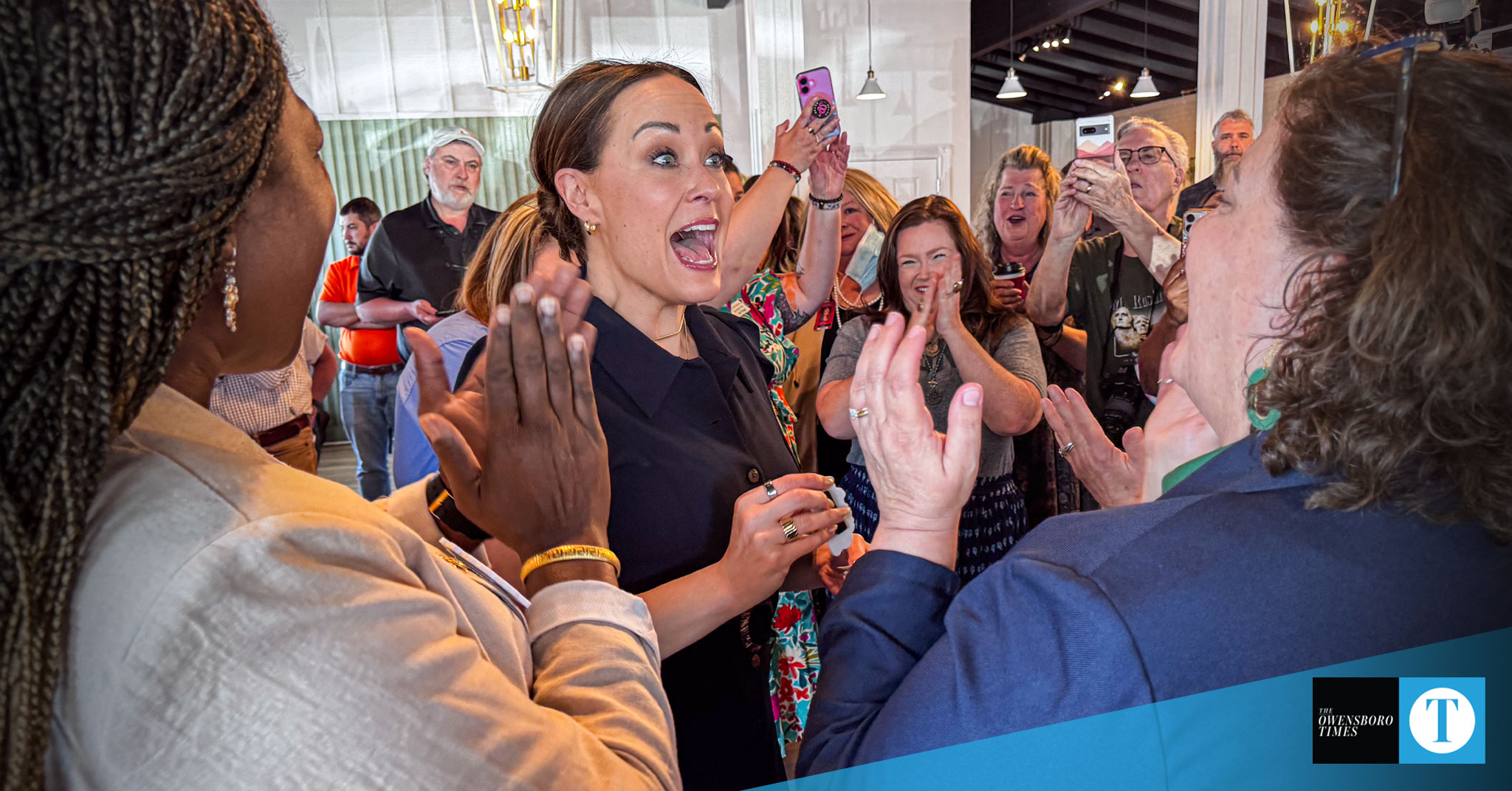
Lt. Gov. Jacqueline Coleman visited Owensboro on Wednesday, highlighting work she says is continuing across Kentucky in her current role. Coleman recently announced her bid for governor.
Coleman’s remarks and interview focused largely on initiatives tied to the Beshear administration and how they are impacting communities such as Owensboro.
“Pre-K is something I’m going to keep fighting for, because it’s something our families, our communities, our employees and our companies need across Kentucky, and I will not stop until that’s a reality for every Kentucky family,” Coleman said during her remarks.
She pointed to ongoing efforts in economic and workforce development.
“We have created over 70,000 new jobs in Kentucky,” she said. “Over $40 billion worth of private sector investments have come to Kentucky in our six and a half years… We just finished the best quarter for economic development ever. We’re still going.”
In an interview following the event, Coleman said her role as lieutenant governor has included leading or supporting several initiatives she believes have had a direct impact across the state.
“One of the things I’m most proud of is we brought $40 million to Kentucky for school-based mental health services,” she said. “I also helped start the state’s first urban search and rescue team. We were one of seven states that did not have a statewide coordinated effort for natural disaster recovery.”
She said those efforts were shaped in part by recent disasters in Kentucky.
“Think about what we’ve been through in the west with tornadoes, in the east with the flooding,” Coleman said.
Coleman also emphasized her focus on rural communities, saying she has worked to bring jobs closer to where people live.
“I really tried to focus on rural economic development, because I’m from a small town, and I want to make sure we’re taking jobs to people, and not expecting people to drive two and three hours just to get a good-paying job,” she said.
She pointed to Owensboro as an example of a community whose approach can be shared across the state.
“The things that I see and hear and learn here from people in Owensboro, I take to other parts of the state,” Coleman said. “When they’re facing a challenge, I say, ‘Well, you need to go call so and so from Owensboro, because here’s what they’re doing.’”