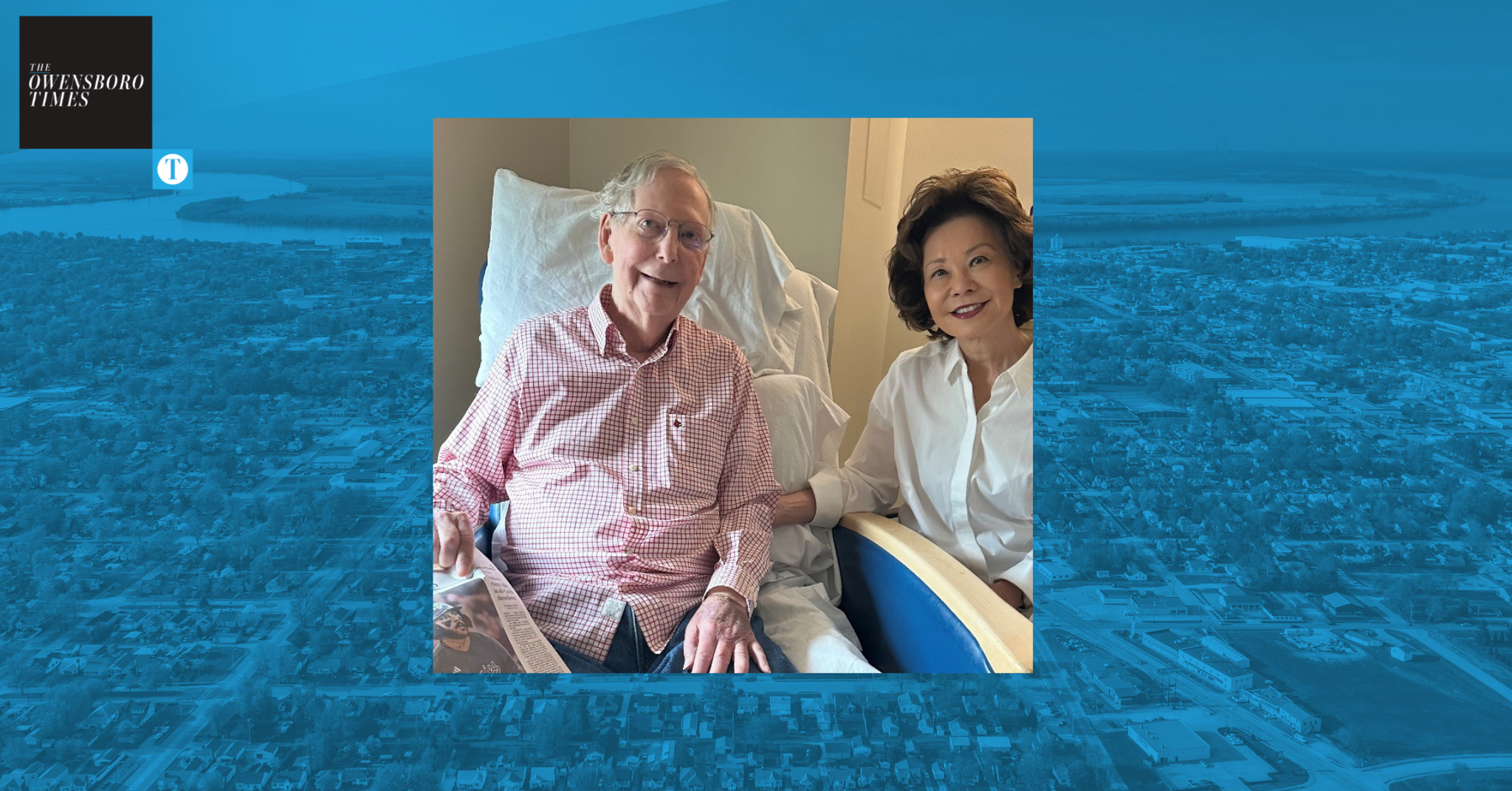
U.S. Sen. Mitch McConnell said he is continuing his recovery at a rehabilitation center after a fall led to a four-week hospitalization and treatment for pneumonia, according to a statement released Sunday by his office.
The update comes after weeks of limited information about the Kentucky Republican’s condition and growing questions about his ability to return to the U.S. Senate.
Gov. Andy Beshear sent McConnell a letter Wednesday requesting that he provide Kentuckians with a full update on his health. In the letter, Beshear said concerns had grown about McConnell’s health, well-being, and ability to hold office.
“As public officeholders, we have made a commitment to our constituents to do our best to represent them and to always be transparent,” Beshear wrote. “I believe this requires clear communication about one’s ability to serve.”
The Associated Press reported McConnell had been hospitalized since June 14 and had not released a public statement, photo, or video in the weeks following his hospitalization. His aides had previously said only that he was improving and continuing to work with his staff on Kentucky and Senate matters.
McConnell addressed those concerns in a note to constituents Sunday.
“Over the past several weeks, Elaine and I have appreciated both your well wishes and your honest questions about what was keeping me away from the Senate,” McConnell said in the statement.
McConnell said he fell last month and was briefly unconscious before being taken to the hospital. He said doctors determined he did not suffer any broken bones, a concussion, heart attack or stroke. Tests also found no tumors or hemorrhages.
McConnell, who survived polio as a child, said he has dealt with mobility challenges throughout his life that have become more difficult with age.
“Surviving childhood polio meant spending my entire life with mobility challenges,” he said. “They haven’t exactly gotten easier to manage with age.”
According to a statement from the Office of the Attending Physician included in McConnell’s release, the senator has experienced several falls throughout the year attributed to his post-polio condition. A multidisciplinary medical team found no fractures, cardiac abnormalities, stroke, tumor or hemorrhage following his latest fall.
McConnell developed pneumonia early in his hospitalization, according to the physician’s statement. The illness responded quickly to antibiotics.
The statement said the remainder of his hospital stay is focused on physical therapy and reducing his risk of future falls. McConnell has since been medically cleared to continue an intensive physical therapy program at a rehabilitation center.
McConnell said doctors have not yet cleared him to return to the Senate floor for votes.
“As much as it frustrates me, this process takes time,” McConnell said. “And on the advice of my doctors, I won’t be able to return to the Senate floor to vote quite yet.”
His continued absence has implications for Senate business. Under Senate voting procedures, senators cast roll-call votes individually on the chamber floor, meaning McConnell cannot cast floor votes while absent. The Senate is entering a key stretch of work on government spending and defense funding, and McConnell holds an influential role in the appropriations process.
Questions about McConnell’s health also have raised the possibility of what would happen if his Senate seat became vacant. The Associated Press reported that Kentucky law requires a special election to fill a U.S. Senate vacancy and no longer gives the governor authority to appoint a temporary replacement. The timing of a potential vacancy late in McConnell’s term, however, could create uncertainty about when an election would be held and how long the seat would remain open.
McConnell has not said he plans to leave office before his term expires. He previously announced he would not seek reelection and plans to retire when his term ends in January.
McConnell said he remains involved in Senate business, working with his legislative and Kentucky staffs and communicating with Senate colleagues about appropriations, midterm politics and other issues.
“You’re right to expect your representatives to work hard for you,” McConnell said. “And part of my decision to retire at the end of my term this coming January was being honest about the demands of Senate work.”
McConnell said he intends to complete his remaining work in office.
“But I still have unfinished business to complete on your behalf, and I have every intention of finishing the job you elected me to do,” he said.
McConnell said he will continue working toward a return to the Senate floor and provide updates on his recovery.
“Until then, I’m so grateful for your prayers and well wishes,” he said.